
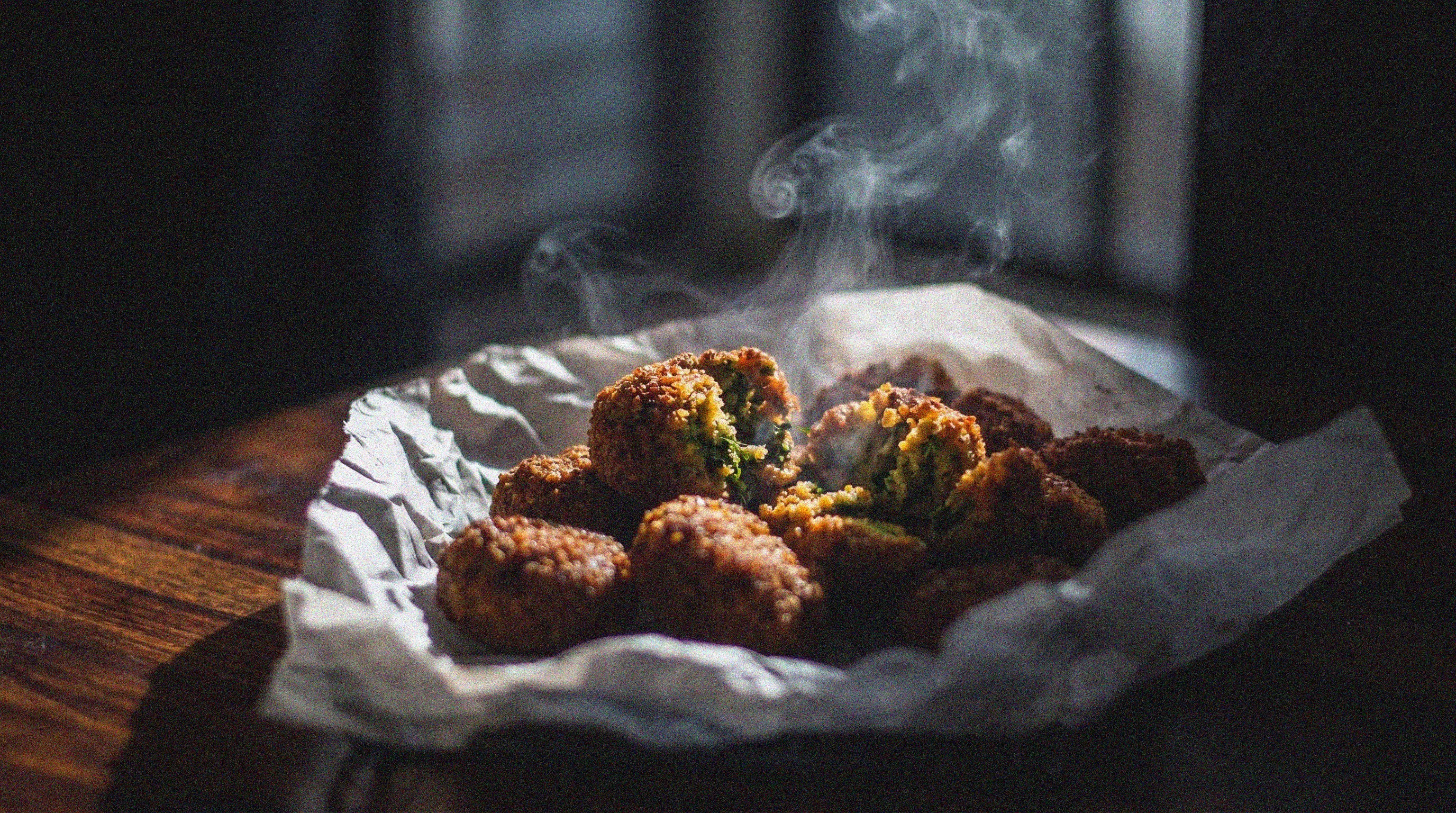
Tobias's Falafel
A recipe that arrived by voice note and never left.
There are people you lose. And there are people you somehow keep, even when you can’t explain how, even when the math of distance and time says you shouldn’t.
Tobias is one of those.
An artist. A singer. The kind of person who makes you laugh so hard you forget what city you’re in. I’ve known him since I was small enough to not remember how we met, which is probably the best way to know anyone.
São Paulo, Barcelona. We shouldn’t still talk. But every year, like clockwork that neither of us wound, we do.
I think it was Instagram. A craving. Something passed through my feed or my head, I can’t tell anymore which one feeds the other. And suddenly I remembered: Tobias made falafel. Not the kind you find frozen in plastic trays at the supermarket, the kind that makes you wonder who hurt the person who invented frozen falafel. His were absurd. Made with a kind of patience that looked a lot like love, if love were round and fried.
So I asked.
And he sent a voice note.
Not a recipe, a voice note. No measurements, no steps, no “preheat the oven to.” Just him, talking, the way you’d explain something to someone you trust enough to not be precise with. Pega um tanto de grão de bico, deixa de molho a noite toda, depois… (grab a bunch of chickpeas, soak them overnight, then…)
That voice note travelled. I played it for friends. Chef friends. The kind who trained in serious kitchens with serious knives and serious opinions about chickpeas. They listened. They made it. They kept making it.
Tobias’s falafel is now everybody’s falafel, and he has no idea.
(Tobias, if you’re reading this, I hope you’re not mad. But also, you sent it in a voice note. That’s basically public domain.)
Here’s the thing about a recipe that arrives by voice: you have to interpret it. There’s no going back to check. There’s no screenshot. You listened, you remembered what you remembered, and the rest you filled in with whatever you are.
That’s the only kind of recipe I care about.
The kind that trusts you. The kind that says more or less this much, and means it. The kind that assumes you’ll taste as you go, that you’ll adjust, that you’ll make it yours whether you meant to or not.
Conventional recipes are for people who believe love has a temperature. 180°C, exactly. I find that suspicious.
Trust me. It won’t fail. And if it does, make it again. That’s the whole secret Tobias didn’t bother to mention.